Corpus of Recorded Counterpoint Examples
A research corpus of recorded realisations of Renaissance improvised counterpoint
The Corpus of Recorded Counterpoint Examples (CRCE) is a multi-volume research audio corpus comprising 420 historically informed instrumental recordings of 276 counterpoint exempla transmitted in Renaissance music theory treatises. The recordings document performative realisations of pedagogical repertories preserved in sources by Mateo de Aranda, Melchor de Torres, and Vicente Lusitano.
An integrated listening and search environment is available within the CRCE research infrastructure, providing corpus-level access to all recordings alongside contextual listening interfaces embedded within the project’s treatise-specific research sites. Conceived as a scholarly navigation and study tool, this infrastructure enables continuous traversal of example sequences while preserving alignment between manuscript ordering, editorial numbering systems, and the corresponding research datasets.
The corpus is organised into six thematic volumes reflecting distinct source repertories. While the examples of Aranda and Torres each form a single volume, Lusitano’s more extensive material is distributed across four volumes reflecting different contrapuntal domains: solo counterpoint on cantus firmus, concerted counterpoint, canonic procedures, and counterpoint on mensural music.
Corpus structure
- Mateo de Aranda — 38 Counterpoint Examples
- Melchor de Torres — 25 Solo Counterpoint Examples
- Vicente Lusitano — 125 Solo Counterpoint Examples (Vol. 1)
- Vicente Lusitano — 14 Concerted Counterpoint Examples (Vol. 2)
- Vicente Lusitano — 34 Canonic Counterpoint Examples (Vol. 3)
- Vicente Lusitano — 38 Counterpoint Examples on Mensural Music (Vol. 4)
Covers
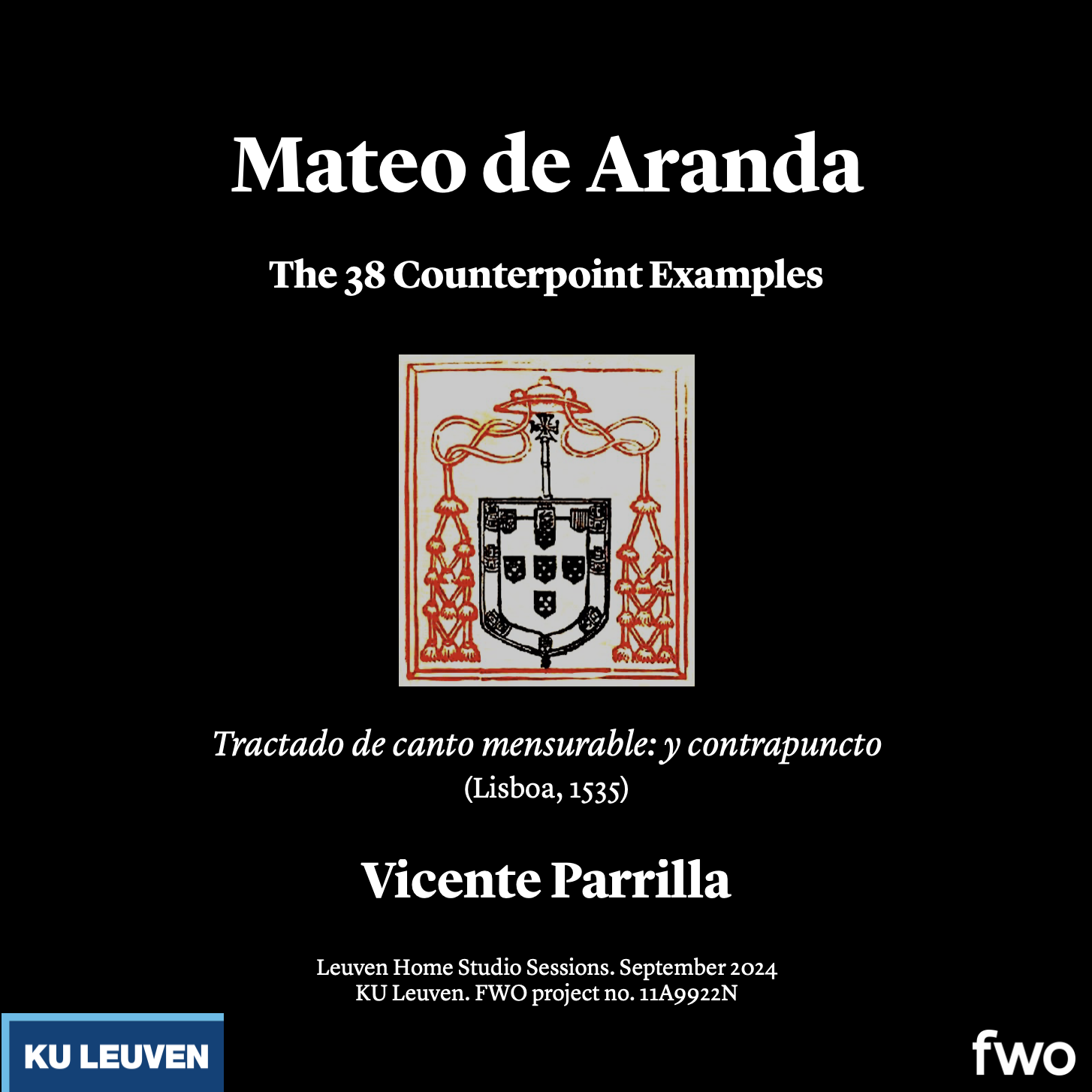
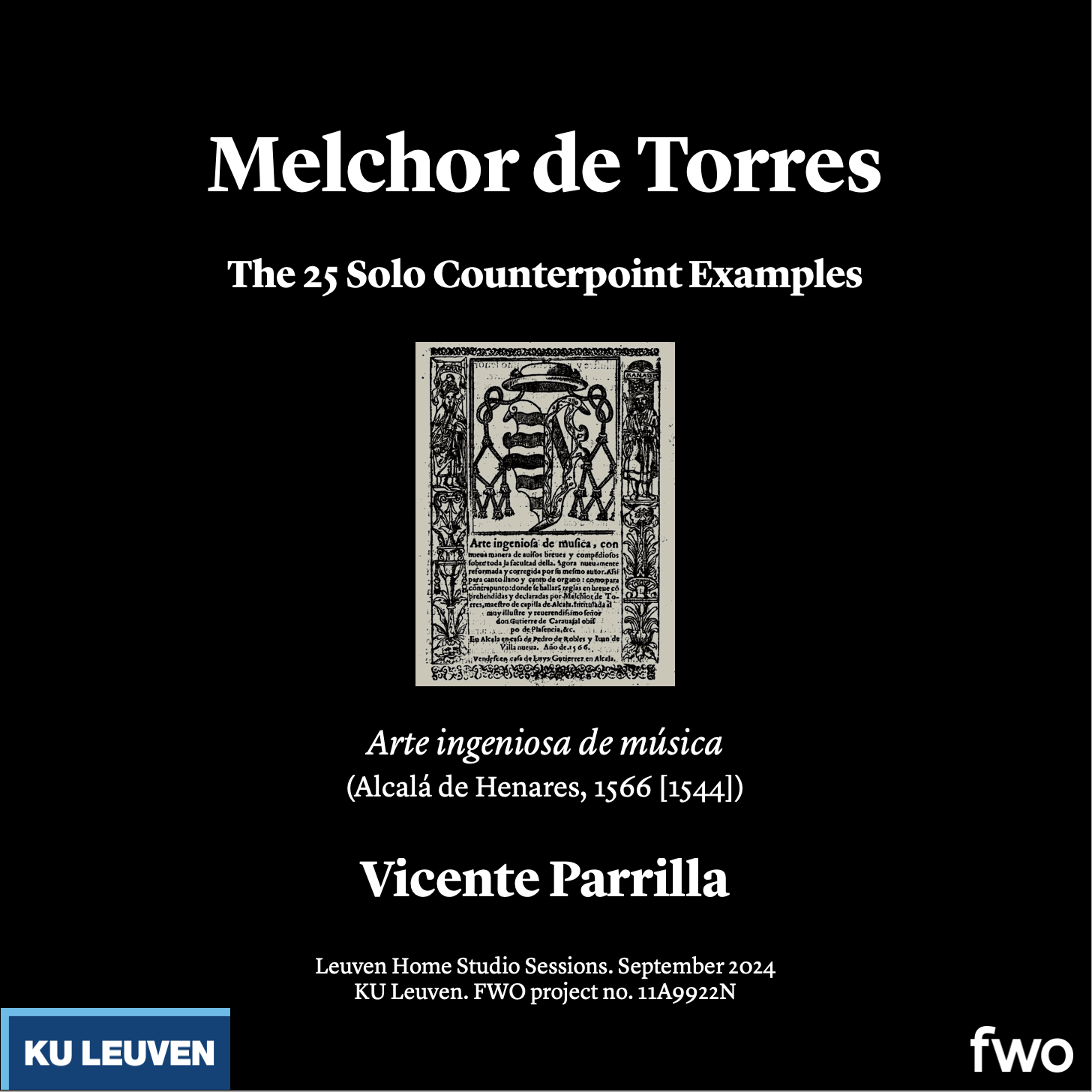
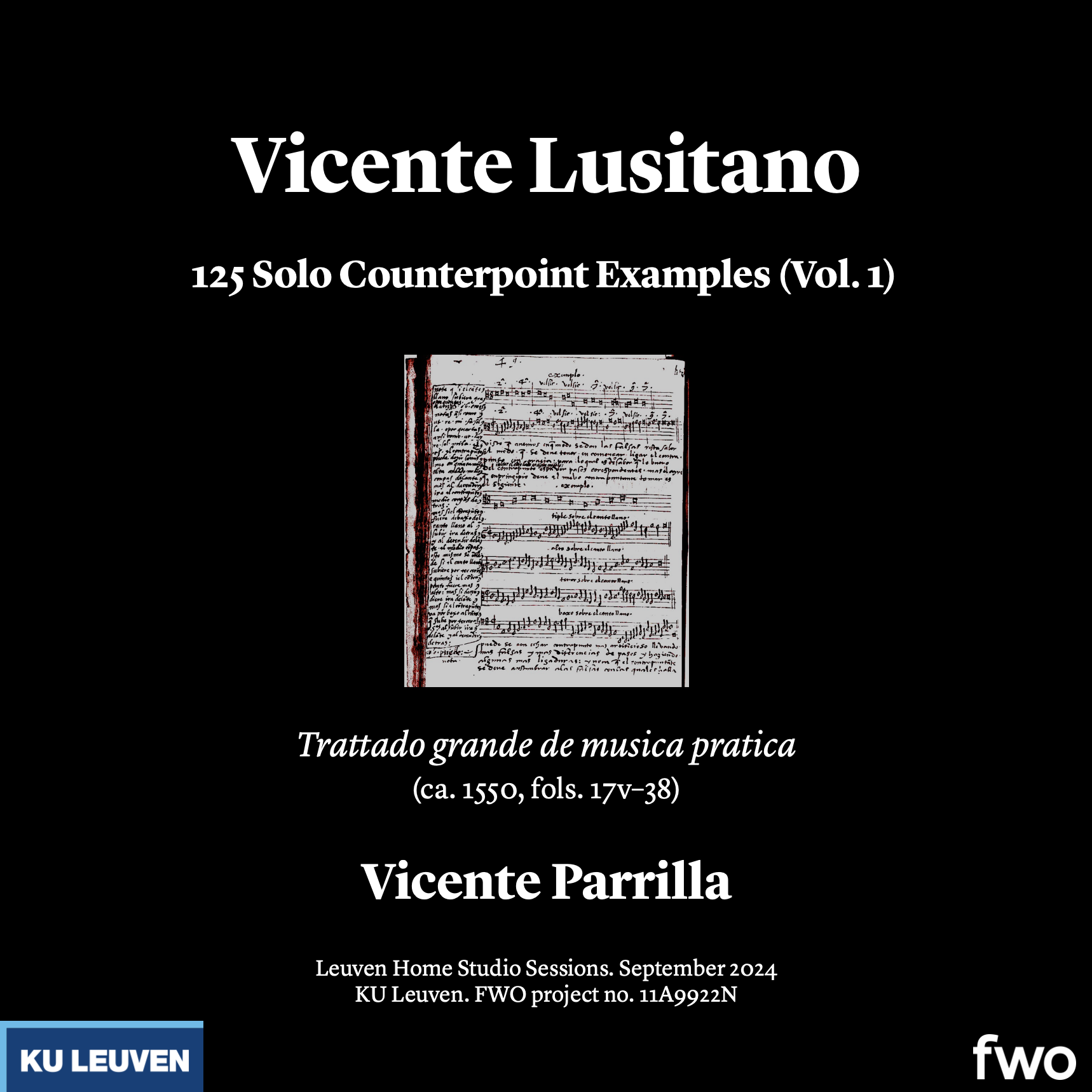
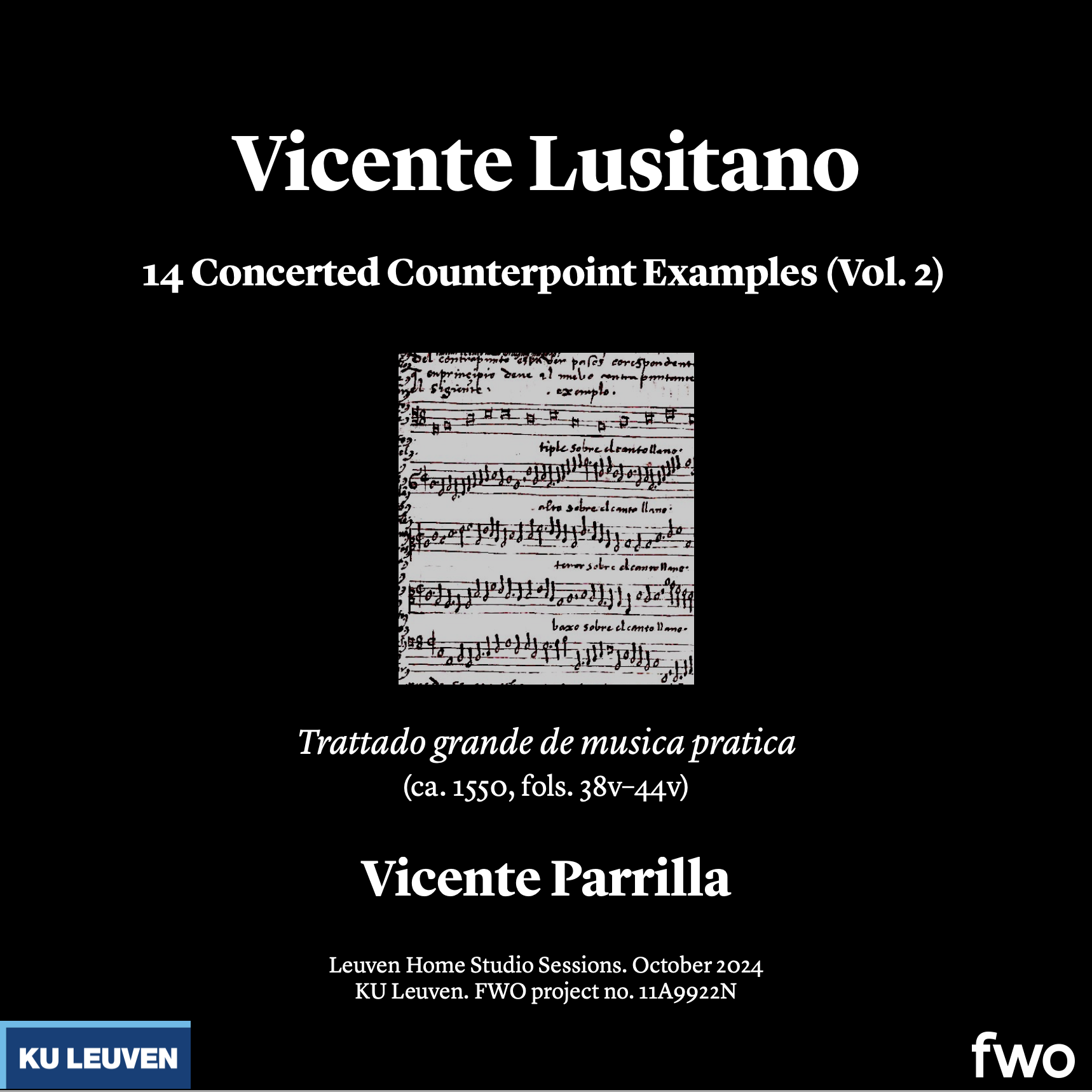
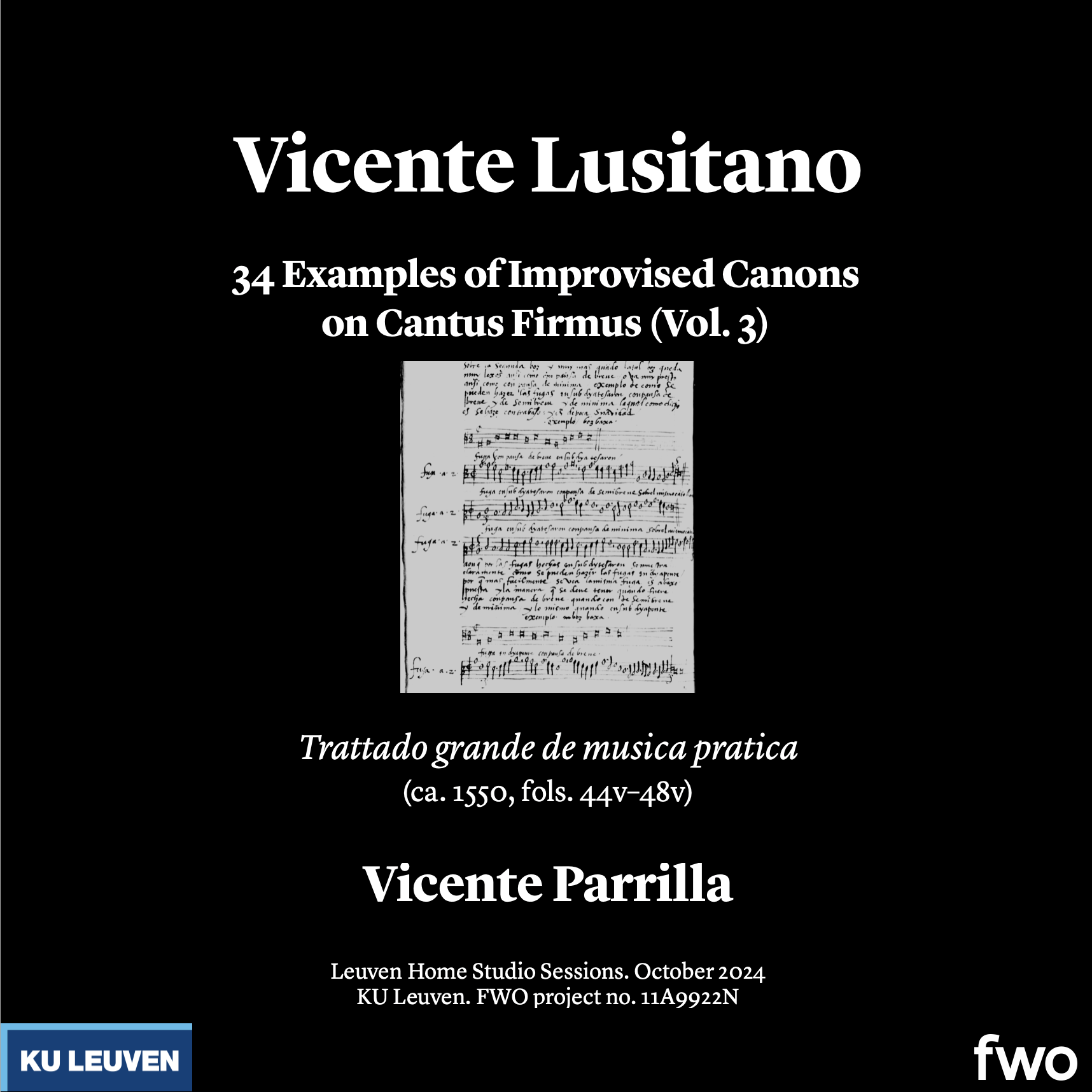
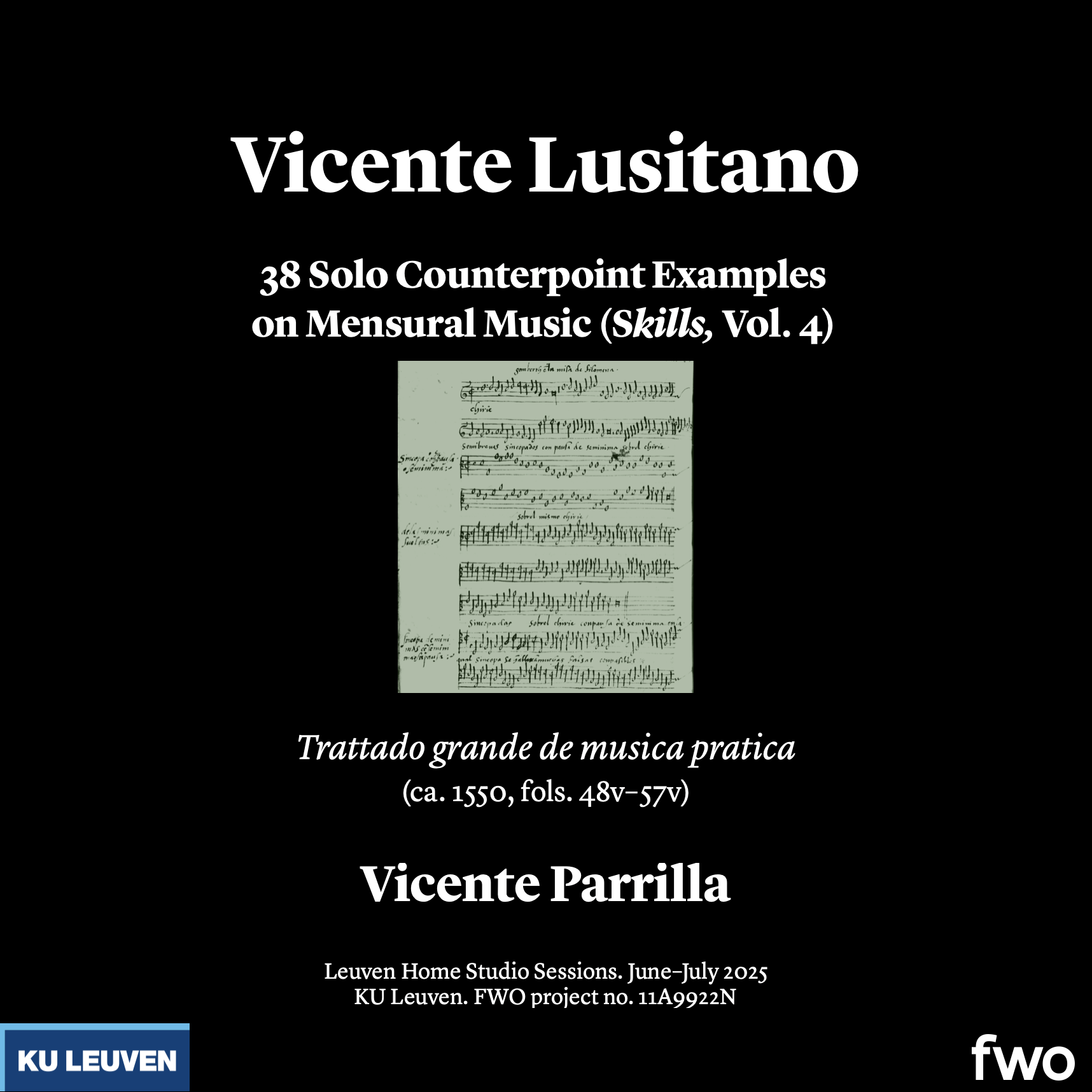
Corpus of Recorded Counterpoint Examples – volume covers.
All CRCE recordings are published as open-access research data on Zenodo and are accompanied by corpus-wide metadata, technical documentation, and navigational tools.
Access to recordings and datasets
All recordings forming the Corpus of Recorded Counterpoint Examples are available for listening and download via the corresponding Zenodo datasets:
| CRCE vol. |
Author | Content | Dataset |
|---|---|---|---|
| 1 | Mateo de Aranda | Counterpoint examples | https://doi.org/10.5281/zenodo.18944002 |
| 2 | Melchor de Torres | Solo counterpoint | https://doi.org/10.5281/zenodo.18944766 |
| 3 | Vicente Lusitano | Solo counterpoint on cantus firmus | https://doi.org/10.5281/zenodo.18944882 |
| 4 | Vicente Lusitano | Concerted counterpoint | https://doi.org/10.5281/zenodo.18944977 |
| 5 | Vicente Lusitano | Canonic counterpoint | https://doi.org/10.5281/zenodo.18945152 |
| 6 | Vicente Lusitano | Counterpoint on mensural music | https://doi.org/10.5281/zenodo.18945232 |
Corpus documentation
Corpus-wide metadata, technical documentation, and navigational tools are provided in the CRCE overview dataset.
| Dataset | Description | DOI |
|---|---|---|
| CRCE overview dataset | Metadata and corpus documentation | https://doi.org/10.5281/zenodo.18648158 |
Zenodo community
All CRCE datasets form part of the Improvised Counterpoint Sources and Corpora research community on Zenodo, which brings together digital corpora of primary sources and related audio datasets within a unified scholarly infrastructure.
Corpus listening and navigation interface
In addition to dataset-level access via Zenodo, the corpus can be explored through an integrated listening interface providing structured traversal of all recordings:
-
Volume-based listening interface (editorial order):
https://improvisedcounterpoint.com/recordings/listen/ -
Corpus-level listening and navigation interface (analytical access):
https://improvisedcounterpoint.com/search
These tools allow users to navigate the corpus independently of treatise structure, enabling both linear listening and analytical exploration across sources.
Using the CRCE player
The listening interface is conceived as a research navigation tool rather than a conventional media player. It supports both sequential listening and targeted analytical exploration across the corpus.
Basic interaction principles include:
- sequential traversal of recordings within individual volumes or across the full corpus
- filtered navigation through the search interface by author, counterpoint type, texture, and corpus structure
- playback and navigation control via both on-screen interaction and keyboard commands (e.g. space bar for play/pause, arrow keys for temporal navigation and track selection)
- stable alignment between track numbering, editorial example numbering, and dataset identifiers
Together, these features support aural-procedural engagement with the corpus as a unified research object.
Listening in editorial context: companion sites
While the corpus-level interface enables global navigation, the counterpoint examples of Aranda and Lusitano are also presented within their editorial and manuscript context on the treatise-specific companion sites:
This dual mode of access allows the corpus to function both as a standalone research dataset and as part of a treatise-structured analytical environment.
Illustrative listening example
The following recording exemplifies a constrained contrapuntal procedure documented within the corpus and may serve as an entry point for analytical listening.
CRCE track 218. This example demonstrates counterpoint constrained by the exclusive reiteration of the ostinato motive la–sol–fa–mi–re. The corresponding score may be consulted on the Lusitano companion site.
Overview of sources, exempla, and recordings
| Recording session |
Source | Content | No. of exempla |
No. of recordings |
Tracks | Recording time |
Recording dates |
|---|---|---|---|---|---|---|---|
| 1 | Aranda 1535 | Counterpoint Examples | 38 | 53 | 001–053 | 35:54 | September 13–15, 2024 |
| 2 | Torres 1566 [1544] | Solo Counterpoint Examples | 25 | 32 | 054–085 | 18:05 | September 16, 2024 |
| 3 | Lusitano F-Pn Esp. 219 | Solo Counterpoint Examples | 122 + 3* | 149 | 086–234 | 1:40:09 | September 17–30, 2024 |
| 4 | Lusitano F-Pn Esp. 219 | Concerted Counterpoint Examples | 14 + 1* | 18 | 235–252 | 11:53 | October 10–17, 2024 |
| 5 | Lusitano F-Pn Esp. 219 | Canonic Counterpoint Examples | 34 + 1* | 104 | 253–356 | 1:07:34 | October 18–24 and 28–30, 2024 |
| 6 | Lusitano F-Pn Esp. 219 | Counterpoint on Mensural Music | 38 | 64 | 357–420 | 1:07:10 | June 12–13 and July 12, 2025 |
| Total | 276 | 420 | 5:00:45 |
Overview of the recording sessions forming the CRCE corpus, indicating the source repertories, the number of transmitted exempla, and the corresponding number of recorded realisations. Click or tap inside the table, then scroll horizontally to view the rightmost columns.
*: Asterisks indicate isolated examples outside the principal cantus-firmus series.
Recording environment
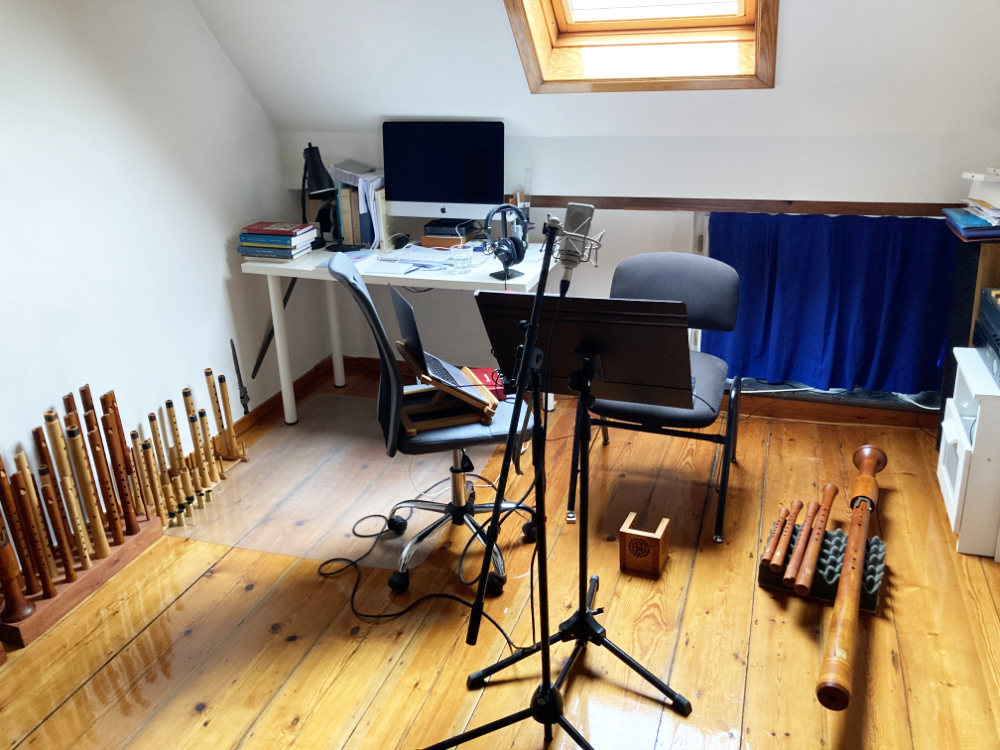
All recordings were produced in a controlled home-studio environment in Leuven, enabling consistent acoustic conditions across recording sessions. For optimal listening, the use of headphones is recommended.